Bad Credit Does Not Have to Mean No Mortgage
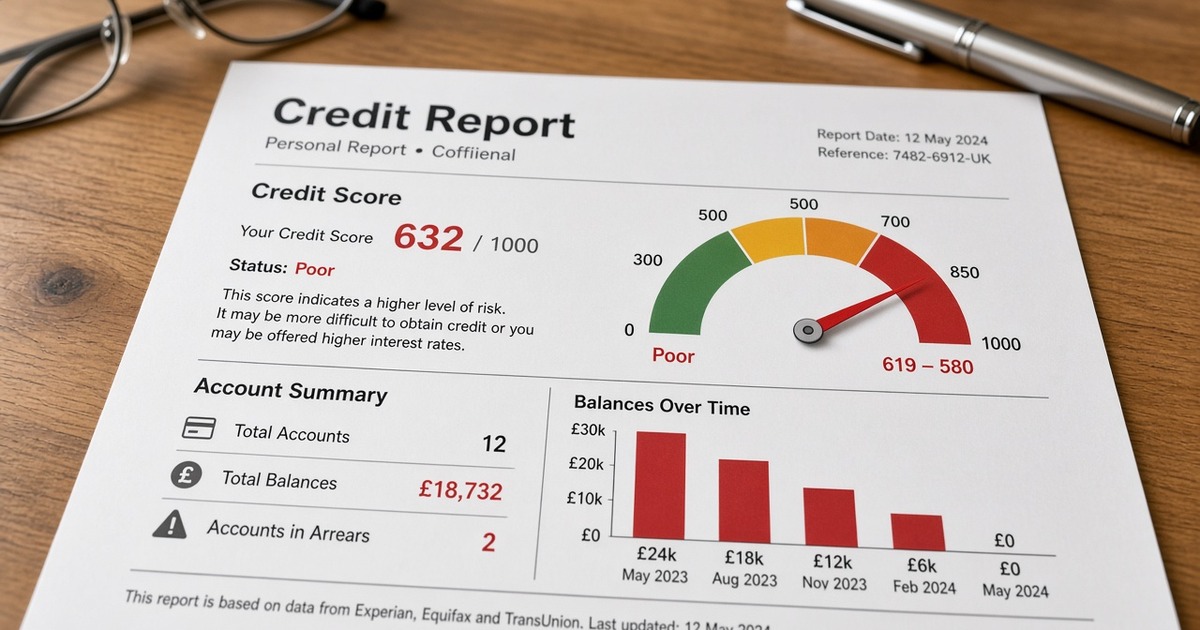
Missed payments, defaults, County Court Judgments (CCJs), Debt Management Plans (DMPs), IVAs and even bankruptcy are more common than most people realise, often caused by illness, divorce, job loss or business problems. High-street lenders usually decline automatically on credit scoring. Specialist lenders underwrite manually and price by the age, value and type of each event. Our bad credit mortgage and specialist mortgage broker services exist for exactly these cases.
How Specialist Lenders Price Adverse Credit
Specialist lenders do not use a single yes or no. They place you in a tier based on three questions: how recent was the event, how much was it for, and has it been satisfied? The more recent and larger the event, the higher the deposit and rate. As events age, you move into better tiers.
Defaults and CCJs: satisfied vs unsatisfied
A satisfied default or CCJ, one you have paid off, is viewed more favourably than an unsatisfied one. Many lenders ignore events over three to six years old. Some accept unsatisfied defaults if they are small and older than a year or two, while others insist they are cleared before completion.
Small utility and communications defaults
Many lenders ignore small defaults from utility, mobile phone and broadband providers, typically below a threshold of around £250 to £500, because they are so often caused by billing disputes or moving home.
Debt Management Plans: active vs satisfied
A satisfied DMP is accepted by many specialist lenders, sometimes from the day it is completed. An active DMP is harder but not impossible: some lenders will consider it if payments have been maintained for 12 months or more, often with a larger deposit.
IVAs and bankruptcy: discharge tiers
After an IVA or bankruptcy, the clock usually starts from the discharge date. Some specialist lenders will consider applicants from one day after discharge with a larger deposit; options widen significantly after three years and many high-street lenders return after six years, when the record drops off your credit file.
Payday loans
Payday loans are treated cautiously by many high-street lenders even when repaid on time, particularly if taken in the last 12 months. Specialist lenders are more relaxed, especially where the loans are repaid and not recurring.
Missed mortgage and credit payments
Missed payments on unsecured credit are treated less severely than missed mortgage payments. Lenders look at how many, how recent and whether the account is now up to date. A single late payment two years ago will rarely cause a problem; recent mortgage arrears need a specialist.
Deposit Tiers: What You Will Need
- 5% to 15% deposit: possible for historic minor blips, such as a couple of small satisfied defaults over two or three years old or isolated late payments.
- 15% deposit: typical for more significant but older events, such as satisfied CCJs or a completed DMP.
- 20% to 25% deposit: usually required for recent events in the last 12 to 24 months, active DMPs or a recent bankruptcy or IVA discharge.
Worked example
Jade, a first-time buyer in Eastbourne, has a £1,800 satisfied default from 2023 and a £340 unsatisfied mobile phone default. A high-street lender declined. A specialist lender ignored the mobile default under its £500 threshold and accepted the satisfied default with a 10% deposit, at a rate around 1% above the high street. She bought a £220,000 flat with a £22,000 deposit.
Self-Employed and CIS Income with Adverse Credit
Combining self-employed or CIS income with adverse credit narrows the market, but specialist lenders do it daily. Some accept one year of accounts or gross CIS income alongside past credit problems. See our CIS mortgage guide and director and 1-year self-employed guide.
The Stepping-Stone Remortgage Strategy
A specialist mortgage is often a stepping stone. Taking a two-year fixed rate lets older events age further while you build a clean payment record. When the deal ends, we review your file and aim to remortgage you back onto high-street rates. Even moving from a 20% to a 30% equity position as your property value rises and the loan reduces can unlock better pricing. Avoid long early repayment charges where you expect to improve quickly.
Improving Your Credit File Before Applying
- Check all three credit reference agency files: Experian, Equifax and TransUnion.
- Register on the electoral roll.
- Clear or settle small outstanding defaults where possible and get satisfaction notices.
- Keep credit card balances low and avoid new credit applications.
- Do not apply direct to lenders before speaking to a broker, as declined searches can harm your score.
Why the Order of Applications Matters
Every full mortgage application leaves a hard search on your credit file. For someone with adverse credit, a string of declines from the wrong lenders can make the next application harder and suggest financial difficulty to underwriters. We start by reviewing your full credit reports from all three agencies, identify every event with its date, value and status, and then match you to a lender whose criteria you already meet before any application is submitted. Where a lender offers a soft-search decision in principle, we use it first so your file is protected.
Honesty is essential. Lenders will see everything on your credit file, so it is always better to disclose events up front with a short explanation of what happened and what has changed since. An underwriter reading a clear story, for example a default during a period of illness that has since been repaid, is far more likely to approve than one discovering an event that was not mentioned.
What Rates and Fees to Expect
Adverse credit mortgages are priced on a sliding scale. Someone with a single minor, older event may pay only slightly more than high-street rates, while a recent CCJ, an active DMP or a recent bankruptcy discharge will carry a noticeably higher rate and often a product fee. Specialist lenders may also limit the maximum loan-to-value or the property types they accept, such as new-build flats or properties above commercial premises. We compare the total cost over the initial fixed period, including fees, rather than the headline rate alone, so you can see which deal genuinely costs least and how it fits your plan to move back to mainstream pricing later.
Frequently Asked Questions
Can I get a mortgage with a CCJ?
Yes. Specialist lenders consider satisfied and sometimes unsatisfied CCJs, with deposit and rate depending on the age and value.
Can I get a mortgage on an active Debt Management Plan?
Some lenders will, usually after 12 months of maintained payments and with a larger deposit.
How long after bankruptcy can I get a mortgage?
Some specialist lenders consider applicants soon after discharge, with options widening after three years and most lenders after six.
Do small defaults matter?
Many lenders ignore small utility or communications defaults under around £250 to £500.
Will I be stuck on a high rate forever?
No. A stepping-stone approach lets you remortgage to better rates once your credit history improves.
Every case we place is reviewed by a CeMAP-qualified adviser before a single credit search is run, so your file goes to the lender most likely to say yes first time. Contact Transparent Mortgage Services for a free, no-obligation review of your figures. Your home may be repossessed if you do not keep up repayments on your mortgage.